CRITICAL THREAT WATCH BACK TO THE WIRE
COMMUNITY SIGNALS

Vote on stories. Share what matters.

CRITICAL THREAT WATCH

Welcome back.

Log in to vote, comment, and share stories with the community.

COMMUNITY SUBMISSION

Add a signal.

Share a link and a clear headline. Your story will be labeled as added by @.

Stories from accounts younger than seven days appear after administrator approval. Queued stories stay private until reviewed.

SYSTEM CREATED / FEED IMPORT PUBLISHED

The U.S. Army will detonate degraded lead azide at the Iowa Army Ammunition Plant in Middletown, Iowa, on Nov. 20 at approximately 12:00 PM CST. Lead azide is a highly sensitive primary explosive used
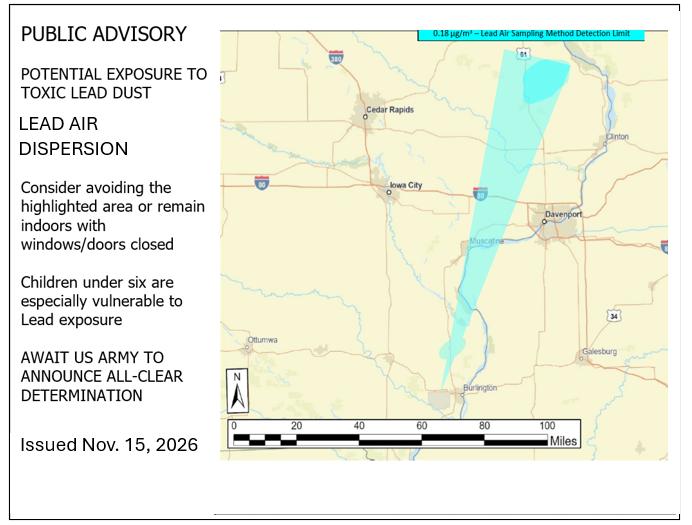
The U.S. Army will detonate degraded lead azide at the Iowa Army Ammunition Plant in Middletown, Iowa, on Nov. 20 at approximately 12:00 PM CST. Lead azide is a highly sensitive primary explosive used

The U.S. Army will detonate degraded lead azide at the Iowa Army Ammunition Plant in Middletown, Iowa, on Nov. 20 at approximately 12:00 PM CST. Lead azide is a highly sensitive primary explosive used in detonators. The stockpile is 68 barrels that have sat at the plant for nearly 20 years. The material has recrystallized, which makes it more sensitive to shock and friction, and the Army has deemed it unsafe to move. Explosive Ordnance Disposal (EOD) teams will destroy it in place, in coordination with the EPA. Army modeling predicts the detonation will create a plume carrying lead particles, which will spread through the air and settle on surfaces downwind. The Army is publishing two exposure maps, one for airborne lead and one for surface dust. The current maps are posted below, but the Army says they may be updated right up until the detonation. About 55 nearby homes have been asked to temporarily relocate. Anyone who lives or works in the affected area is advised what precautions to take before, during and after the detonation.

READ ORIGINAL ARTICLE x.com
SOURCE PROFILEVotes reflect reader preference, not verification.
WATCHLIST & INBOX
AUTOMATED ASSESSMENT · BUILT-IN RULES

Why this matters

The supplied headline, summary, and tags do not give these rules enough evidence to identify a specific preparedness implication. The entry may still provide useful background, but any effect on household safety, services, supplies, or costs needs a clearer connection.

background

Practical implications

Read the original report to identify the affected people, places, services, and time frame. Check a current primary source before changing household plans or treating the entry as an alert.

What remains uncertain

This rule-based assessment uses only the supplied headline, summary, and tags. It does not independently verify the report, determine severity, or confirm that the reader’s location is affected.

Generated from the supplied headline, publisher summary, and tags. Built-in rules suggest possible preparedness implications; they do not independently verify the report. How context is prepared

WATCHER CONVERSATION

Discussion 0

Add useful context. Replies stay with the comment they answer.

Log in to post. Your draft stays here while you sign in.0 / 5,000

Comments from accounts younger than seven days appear after administrator approval.

No comments yet. Start the conversation.